Article
2 apr 2026
Not betting bigger, but steering smarter
Years of experience remain indispensable. But in a more unpredictable market, intuition alone is becoming less and less enough. What really defines your edge today?
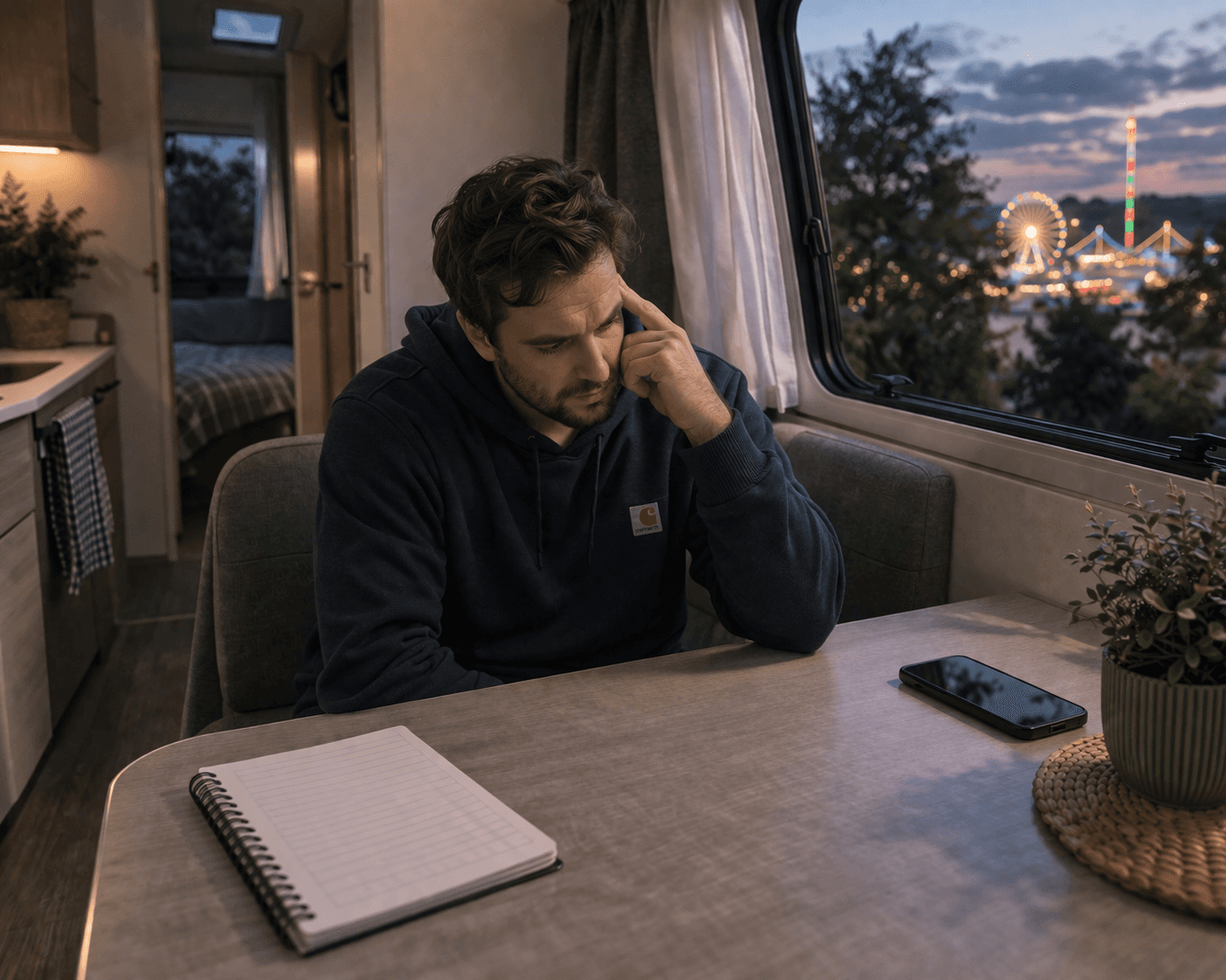
Entrepreneurship is about taking risks.
Especially in the fairground business. That is nothing new, and it is not going to change. Our industry was built by people who dared to move first. Colleagues who invested without guarantees. Operators who put something on the road before anyone else knew for certain whether it would work.
That is how it has always been. And let’s be honest: that is how it should be. A fairground without innovation is a dying fairground. The public does not come for stagnation. It comes for experience, for surprise, for something it has never seen before or wants to experience again. Any operator who thinks things will keep running on their own just because they used to is making a mistake.
But that is exactly where the problem begins.
Because innovation is not the same thing as success. We all know that. Plenty of entrepreneurs had good ideas, good instincts and years of experience, and still got it wrong. Not because they were foolish. Not because they did not understand the business. But because the market is more volatile than it used to be, and the public is getting harder and harder to read.
The public is spoiled. There is competition for attention everywhere. Not just from the ride next to you, but from everything competing for people’s leisure time. People have more choice, less patience, and shorter attention spans. At the same time, market research in our industry is practically useless. We cannot hand out surveys. Our revenue is built on impulse purchases. We set up, operate, tear down and move on. You only find out what really works once you are on site.
So yes, intuition still matters. Experience still matters. Of course it does. But anyone who still thinks gut feeling alone is enough to steer sharply today is falling behind the facts. That may not be a comfortable message, but it is an honest one.
The next edge in the fairground business will not come only from building even bigger, going upside down even more often, or gambling even harder. The next edge comes from understanding more clearly what is actually happening inside your own business. Not based on feeling. Not based on assumptions. But based on what is really happening in your operation.
Not betting bigger, but steering smarter.
That may sound less heroic than a new ride or a major investment. I understand that. But it is exactly where a lot of value is still being left on the table. Too many entrepreneurs make big decisions based on a picture that is only half grounded in reality. They compare seasons by turnover while the circumstances were completely different. They write off a disappointing fair as “bad” when it may simply have been the weather. Or they call an edition “great” when a higher ticket price in a year of high inflation has distorted the picture.
That means you are steering on noise.
And that is a shame, because in a business like ours, noise is expensive. A few wrong conclusions about ticket price, location, opening hours, staffing or concession levels cost more than most people realise.
That is why I believe there is a professionalisation step here for the taking.
Not because the fairground business suddenly needs to become an office world. Not because everything has to drown in dashboards and graphs. But because it simply makes no sense to take major investment decisions, carry major risks, pay high concession fees, and at the same time accept limited visibility into how your business is actually performing. We already deal with enough uncertainty as it is.
That is where I see room.
At the front end, our industry is often bold. At the back end, we are still steering surprisingly often as if it were 2005.
Take something as basic as comparing one year to another at a recurring fair. In many cases, we still look at raw turnover and draw conclusions from that. Logical enough, because for years it was the only usable yardstick. But raw turnover says very little on its own. If it rained for three days, ticket prices changed, inflation went up, or the fair fell differently in the calendar, that comparison tells you almost nothing.
Then you are not comparing years. You are comparing circumstances.
What you actually want to know is something else. You want to know what that edition should have done under normal conditions. You want to strip out the influence of weather, inflation, ticket price and other factors as much as possible. Only then do you see what is really left. And that is exactly where the information starts that is actually useful.
That is where you see whether a fair is genuinely declining or whether you were simply unlucky. That is where you see whether an operation is getting stronger or weaker. That is where you see whether a different spot on the grounds would suit you better. That is where you see whether staffing or operational efficiency is holding back your revenue. That is where you see whether a higher ticket price is truly helping you or mainly destroying volume. That is the information that helps you bid better, plan better and invest better.
Not on gut feeling alone.
And that is exactly why we built Juggler.
For those who do not know Juggler yet: it is our POS system and analytics platform for fairground operators. It does not just register your sales. It helps you keep a live view of your turnover, stay in control of cash and staff, and recognise patterns in your own operation over time. It is not a generic hospitality POS with a different logo on it, but software built around the realities of the traveling fairground business.
Not because the world was crying out for yet another digital system. Nobody is really waiting for that in itself. The industry has already had more than enough “innovation” forced on it through things like card payments: developments nobody asked for, but everyone now has to live with. It is here, it is not going away, and everyone knows both the benefits and the frustrations.
So if you add technology, then as far as I am concerned it has to meet one condition: it has to serve the operator.
That is what Juggler was built for.
In the end, for me it comes down to three things. Always knowing your live turnover. Having more control over cash and staff. And finally being able to draw structural insight from your own business, instead of relying on isolated day totals and scattered memories.
The longer you use a system like that, the more valuable it becomes. Not because there is some kind of magic behind it, but because patterns take time to reveal themselves. The more reliable data you build up from your own POS, opening hours, ticket prices, transactions, cycle times and context, the more readable your business becomes. Then you can test gut decisions. Then you can see whether a feeling was right. Then, in hindsight, you can understand why certain choices worked out well and others did not.
And no, you do not need to worry that your data will disappear into some giant pool.
In fact, that would be worthless to us.
We cannot and do not want to mix customer data together or line up operators as if they were interchangeable businesses. They are not. Operations, locations, audiences and events differ far too much for that. That is exactly why a system like this has to revolve around your business, your history and your patterns. Our business model is to give you as much valuable insight as possible, not to collect as much data as possible. That is why the security of commercially sensitive business information is not a side issue for us, but a hard requirement. Juggler is set up in such a way that customer data is not freely accessible to us. We cannot simply look into the production data of your business.
And precisely because a system like this revolves around your own data, something valuable emerges.
Then you can suddenly see what you could previously only suspect. Then you are no longer just looking back at ten years of turnover, but actually analysing what weather, inflation and ticket pricing have done. Then you do not just see that a year performed worse, but also why. Then you can strip the noise out of your figures and get to the part that actually matters. That is where the real management information is.
And that information is worth money.
Not in theory. In practice. Because it changes the way you bid for fairs. Because it lets you see more clearly which events are still worth their price and which are not. Because you spot earlier where you are failing operationally to achieve what should be possible on paper. Because you know which staff member performs better. Because your cost picture becomes sharper. Because you make fewer blind decisions in a market that is already uncertain enough.
That is not a luxury. It is simply a more rational way to run a business.
That does not mean I am saying that anyone still working with a paper turnover book is doing something wrong. Not at all. If someone is happy with that, they should absolutely keep doing it. But I am saying there is a large group of operators for whom this could add serious value. Not because they suddenly want to “go digital,” but because they want to steer more effectively on what they have already built.
And that, for me, is the difference.
You do not have to buy a major new ride first to move your business forward. You do not have to take another big risk first to get more control over your operation. Sometimes the smartest next step is not betting bigger, but finally seeing more clearly where you already stand.
The fairground business has always been ahead of the curve. We like telling that story, and usually with good reason. But then we also have to be honest about what being ahead of the curve means today. It is not only about daring to buy something new. It is also about daring to professionalise. Daring to measure. Daring to draw conclusions from your own numbers. And daring to admit that steering better sometimes delivers more than taking the next big gamble.
That opportunity is there.
The operators who learn to steer better today will have to gamble less blindly tomorrow.
Dirk de Vries
Fairground operator and co-founder of Juggler
If you want to see what that looks like in practice, you know where to find us. Just request a demo. We will show you exactly how Juggler can make your operation more visible, more measurable and easier to steer.